
Protect Against Cold, Flu and RSV
High-traffic spaces like schools, offices and other shared environments face higher risk during respiratory season. Get the tools and resources you need to help reduce the spread.
See Recommended Products


Proven Protection Against Cold and Flu Viruses
CloroxPro disinfecting solutions are designed to kill a wide range of illness-causing viruses on hard, non-porous surfaces when used as directed. Effective against influenza viruses, RSV and COVID-19 virus.


* Per EPA approved Master Label and when following product directions for use. Respiratory syncytial virus (RSV), Influenza A H1N1 Virus, SARS-CoV-2 (cause of COVID-19)
How to Stay Healthy During Cold and Flu Season
Cold and flu season comes around every year, bringing unique challenges. While its severity varies, certain groups—like young children, older adults, and those with underlying conditions—are at higher risk.
Respiratory illnesses, including COVID-19 and RSV, often overlap during this time, increasing the strain on schools, workplaces, and healthcare systems. Taking preventive measures is essential to staying healthy and protecting those around you.
Take action now
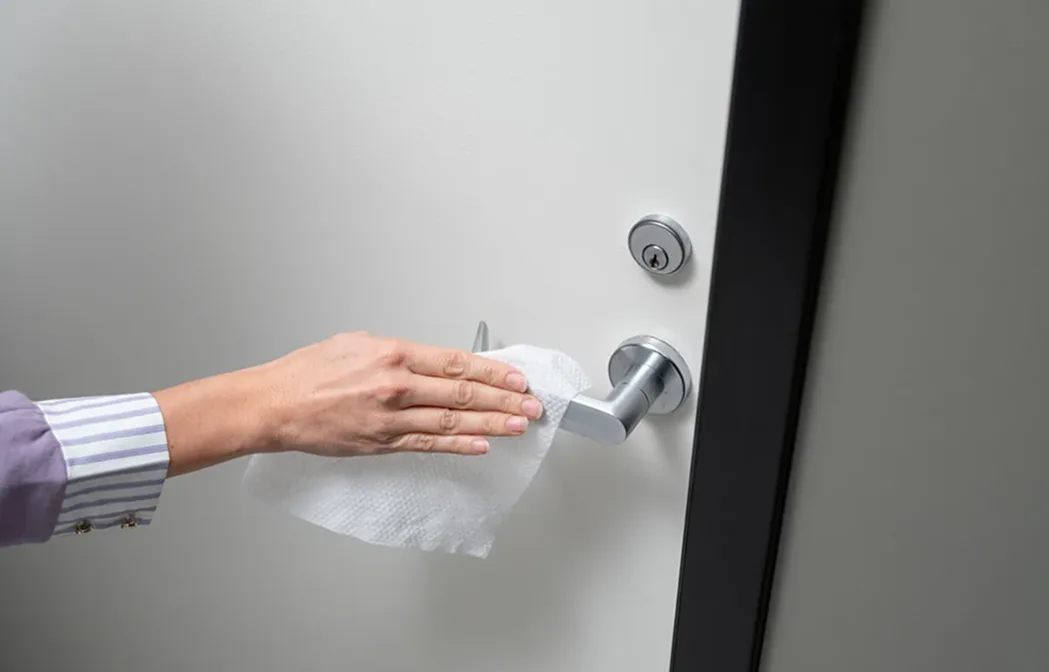
Help reduce the spread of illness:
-
Get vaccinated. The flu vaccine is one of the most effective ways to prevent severe illness.
-
Stay home when sick. This helps stop germs from spreading to others.
-
Clean and disinfect surfaces. Focus on high-touch areas like door handles and shared devices.
-
Improve ventilation. Fresh air helps reduce the concentration of viruses indoors.
These simple steps can make a big difference in keeping you and your community healthy all season long.
Understanding Respiratory Illnesses: Is it a Cold, RSV, Flu or COVID-19?
When there are several respiratory illnesses going around, it can be hard to tell them apart. Here’s what you need to know about the common cold, RSV, flu and COVID-19 viruses.
| Common Cold | Placeholder column header |
|---|---|
| What’s the cause? | Mostly commonly caused by rhinoviruses, but other viruses like parainfluenza and seasonal coronaviruses can cause it, too. |
| What are common symptoms? | Gradual symptoms like sneezing, stuffy nose, mild chest discomfort, and a sore throat |
| How does it spread? | Exposure to respiratory droplets or contaminated surfaces |
| When do symptoms appear? | 2 days after exposure |
| How long is a sick person contagious? | 24 hours before symptoms start and up to 5 days after |
| How long can the virus survive on surfaces? | 2 hours to 7 days |
What You Need Right Now


Clean High-Touch Surfaces Fast
See cleaning tips


Protect Staff and Visitors
Get prevention strategies

Act Quickly During an Outbreak
Follow our response guide

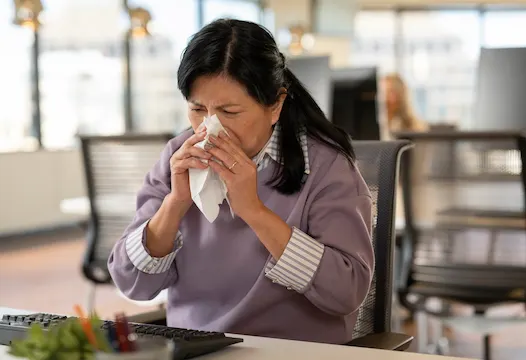
Is it a Cold, RSV, Influenza or COVID-19?
Differentiate Common Respiratory Viruses
Remember to follow CDC’s vaccine recommendations, wash your hands regularly, avoid touching your face with dirty hands, cover your mouth and nose when coughing or sneezing, stay home when you’re sick, and frequently clean and disinfect high-touch surfaces.
- Centers for Disease Control & Prevention. Influenza (Flu) [Internet]. [Cited 2023 May 31]. Available from https://www.cdc.gov/flu/index.htm
- Centers for Disease Control & Prevention. Common Colds: Protect Yourself and Others [Internet]. [Cited 2023 May 31]. Available from https://www.cdc.gov/features/rhinoviruses/index.html
- Heymann DL. Control of Communicable Diseases Manual. 19th edition. Washington, DC: American Public Health Association; 2008. 516-517 p.
- Wissmann JE et al. Persistence of Pathogens in Inanimate Surfaces: A Narrative Review. Microorganisms. 2021 Feb 9;9(2):343.
- Centers for Disease Control and Prevention. Respiratory Syncytial Virus (RSV) [Internet]. [Cited 2023 May 31]. Available from https://www.cdc.gov/rsv/index.html
- Centers for Disease Control and Prevention. About COVID-19 [Internet]. [Cited 2023 May 31]. Available from https://www.cdc.gov/coronavirus/2019-ncov/your-health/about-covid-19.html
- Compiled by Doe Kley, RN, MPH, CIC, T-CHEST, Sr. Infection Preventionist, Clorox Healthcare
* An RSV vaccine has been approved by the FDA for individuals 60 years of age and older, and for pregnant women to protect newborns. An RSV vaccine for the general public, including infants and children, is not available at this time. There is a monoclonal antibody treatment administered monthly during the RSV season to high-risk infants.