
- HealthcarePathogens
What's New in C. auris Disinfection?
If you work in healthcare, Candidozyma auris (formerly Candida auris) needs little introduction. Unlike other organisms, C. auris is a resilient pathogen that is not going anywhere any time soon. Since it was first identified in 2009, this opportunistic, often multidrug-resistant yeast has become one of the most closely watched fungal threats in healthcare, and one of the pathogens the Centers for Disease Control and Prevention (CDC) classifies as an urgent antimicrobial resistant threat.1 Surface disinfection remains one of the most important levers we have for interrupting C. auris spread, but choosing the right product requires looking beyond a general fungicidal claim. In this blog, I'll break down what has changed and what it means for daily C. auris disinfection.
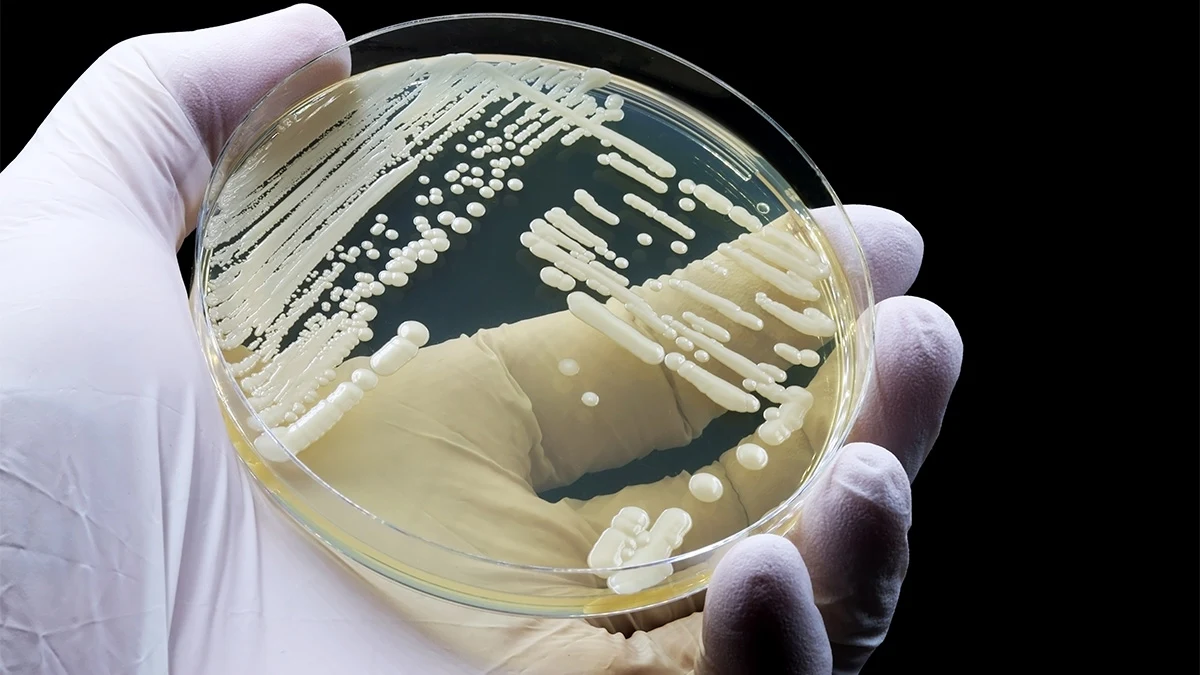
What is the new name for C. auris?
Following a 2024 genomic review, the organism was reclassified from the Candida genus into the new genus Candidozyma, so you'll increasingly see it written as Candidozyma auris in scientific literature and from organizations like APIC and CDC, even though other U.S. agencies including the Environmental Protection Agency (EPA) have not yet adopted the new nomenclature. The good news is that the shortened name, C. auris, still applies (read more on the name change).
How prevalent is C. auris?
C. auris has been at the forefront of infection prevention and control (IPC) efforts since it was first identified, and its footprint in the U.S. continues to expand. CDC surveillance data show 6,304 clinical cases reported in 2024, with total U.S. clinical cases increasing every year since the first domestic case was reported in 2016.2 Provisional 2026 data underscore that the threat is ongoing. CDC's National Notifiable Diseases Surveillance System reports 3,544 cumulative clinical cases year-to-date through Week 30 (ending August 1, 2026).3 These counts are subject to change as jurisdictions reconcile reports, but they confirm that C. auris remains an active, widespread concern requiring sustained IPC attention.3
The CDC surveillance report found that most clinical cases were identified through specimens collected in acute care hospitals (76.6%) and long-term acute care hospitals (17.8%), with the largest share among adults aged 45 and older.4 That concentration is precisely why environmental hygiene is so critical. C. auris colonizes skin and persists on high-touch surfaces and medical equipment, spreading efficiently between patients and across units if IPC practices, including daily and discharge disinfection, are not rigorous.1
What does the latest research say about C. auris surface transmission?
In 2021, my colleague and CloroxPro Principal Infection Preventionist, Doe Kley, described The Problem(s) with Candida auris. She highlighted that environmental contamination plays a critical role in C. auris transmission, and once the organism takes hold in a healthcare environment, eradication becomes a significant and prolonged challenge. Studies have found that colonized patients can rapidly contaminate their environment. A 2024 published study found that in 76% cases, C. auris was detected on the palms/fingertips of colonized patients and the nares for 71% of patients, and C. auris contamination was detected on 32.2% (66/205) of room surfaces before disinfection.5
There is a growing body of evidence shaping how healthcare facilities think about environmental transmission, shared equipment and daily disinfection. C. auris case counts continue to rise each year, but the rate of increase has slowed since 2022. While continued vigilance is needed, this trend is encouraging and may reflect the impact of sustained IPC efforts, including improved cleaning and disinfection practices.6,7,8
Shared multiuse medical equipment (wheelchairs, commodes, IV poles, bladder scanners, medication carts, etc.) travels continuously between patients and each touchpoint creates an opportunity for pathogen transmission. A 2026 study found that during a C. auris outbreak affecting cardiac surgery patients, 84% of samples showed significant microbial contamination.9 Although C. auris was not detected on the surfaces sampled, the study highlighted that contamination was most common on shared, mobile, and high-touch medical equipment.9 A 2021 narrative review found that C. auris has been reported to persist on inanimate surfaces for up to two weeks, reinforcing the need for strict adherence to a robust IPC plan, including cleaning and disinfection of surfaces and shared medical equipment.10
What disinfectants can be used against C. auris?
Given its propensity to cause outbreaks, the CDC recommends a multi-layered approach to C. auris containment: hand hygiene, standard and contact precautions with appropriate personal protective equipment (PPE), private rooms for colonized or infected patients, and thorough daily cleaning and terminal disinfection with an EPA-registered hospital-grade disinfectant effective against C. auris.11 CDC and EPA point clinicians to EPA List P, Antimicrobial Products Registered with EPA for Claims Against Candida auris, as the current reference for products with C. auris claims.
- Start with EPA List P — Products on List P have EPA-reviewed laboratory testing data supporting claims against C. auris; EPA also directs users to follow the label directions for C. auris, including the listed contact time.11
- Confirm the product has a specific C. auris claim — CDC notes that some products with C. albicans or general fungicidal claims may not be effective against C. auris.11
- Do not assume similar chemistries perform the same way — A peer-reviewed study of disinfectant towelettes found that product formulation and contact time significantly affected efficacy against C. auris on hard, nonporous surfaces.12,13
- Prioritize products with evidence of reliable activity — A study of 23 commonly used healthcare disinfectants found that sporicidal disinfectants were consistently effective against C. auris, while quaternary-ammonium disinfectants had limited activity and quaternary-ammonium–alcohol and hydrogen-peroxide-based products varied in effectiveness.14
- Consider the broader evidence base — A 2026 systematic review found that chlorine-based disinfectants and oxidizing chemistries, including hydrogen peroxide/peracetic acid formulations, most consistently achieved high-level reductions of C. auris under label-relevant conditions.15
What are some new options for daily C. auris disinfection in healthcare spaces?
Clorox Healthcare has innovated two new healthcare daily disinfectants to meet this need:
- Clorox Healthcare™ Quat Alcohol Disinfecting Wipes uses a triple-active blend of isopropyl alcohol, quaternary ammonium compounds, and citric acid to disinfect in 1 minute, including a 1-minute kill claim against C. auris on hard, nonporous surfaces. The wipes are formulated to keep surfaces wet for the full contact time and are designed for daily use on high-touch surfaces and shared, mobile equipment.
- Clorox Healthcare™ HyperOxi Disinfecting Wipes deliver sporicidal efficacy in a non-bleach formula and also kill C. auris in one minute. The wipes are designed for use on healthcare surfaces and medical equipment.
The bottom line
C. auris is not going away. Case counts are still rising, and it remains concentrated in the acute and long-term care settings where IPC teams work every day.2-4 The latest 2026 surveillance data confirms thousands of cases already reported this year, and recent outbreak research reinforces that shared, mobile medical equipment is an overlooked reservoir, which means your disinfection strategy has to be practical enough to keep up with equipment that moves between patients.4-15 The best disinfectant for C. auris is one with a proven EPA-registered C. auris claim, one that's easy to use compliantly in a ready-to-use (RTU) format with a short contact time, and one that is safe on a wide variety of surfaces.
Clorox Healthcare Quat Alcohol Disinfecting Wipes and Clorox Healthcare HyperOxi Disinfecting Wipes bring together the right chemistries, the right contact time, and one-step convenience to support daily disinfection where it matters most.
For the full list of EPA-registered C. auris products and their contact times, visit EPA List P.
Share this article
About the Author

More from the Clorox Pro Blog
References
- Centers for Disease Control and Prevention. (2026, June 26). About C. auris. https://www.cdc.gov/candida-auris/about/index.html
- Centers for Disease Control and Prevention. (2026, March 3). Tracking C. auris. https://www.cdc.gov/candida-auris/tracking-c-auris/index.html
- Centers for Disease Control and Prevention. (2026, August 1). Candida auris, clinical (Week 30): Weekly cases* of notifiable diseases, United States, U.S. Territories, and Non-U.S. Residents, week ending August 1, 2026. National Notifiable Diseases Surveillance System, Infectious Weekly Tables. https://stacks.cdc.gov/view/cdc/258598
- Gold, J. A. W., et al. (2026, July 2). Surveillance for Candida auris — United States, 2022–2024. Morbidity and Mortality Weekly Report Surveillance Summaries, 75(SS-4), 1–11. https://www.cdc.gov/mmwr/volumes/75/ss/ss7504a1.htm
- Sansom, S. E., et al. (2024). Rapid environmental contamination with Candida auris and multidrug-resistant bacterial pathogens near colonized patients. Clinical Infectious Diseases, 78(5), 1276–1284. https://doi.org/10.1093/cid/ciad752
- Cortegiani, A., Misseri, G., Giarratano, A., Bassetti, M., & Eyre, D. (2019). The global challenge of Candida auris in the intensive care unit. Critical Care, 23(1), 150. https://doi.org/10.1186/s13054-019-2449-y
- Jencson, A. L., Cadnum, J. L., Wilson, B. M., & Donskey, C. J. (2019). Spores on wheels: Wheelchairs are a potential vector for dissemination of pathogens in healthcare facilities. Am J Infect Control, 47(4), 459–461.
- Jenks, J. D., Tobin, E. H., & Zahra, F. (2025). Candida auris. In StatPearls. StatPearls Publishing. https://ncbi.nlm.nih.gov/books/NBK563297/
- Vacca, M. L., et al. (2026). Candidozyma auris (formerly Candida auris) in the acute care environment: Identifying and controlling transmission through a systematic investigation in an academic hospital. American Journal of Infection Control, 54, 1033–1035. https://doi.org/10.1016/j.ajic.2026.04.017
- Wißmann, J. E., et al. (2021). Persistence of pathogens on inanimate surfaces: A narrative review. Microorganisms, 9(2), 343. https://pubmed.ncbi.nlm.nih.gov/33572303/
- Centers for Disease Control and Prevention. (2025, December 15). Preventing the spread of C. auris. https://www.cdc.gov/candida-auris/prevention/index.html
- Voorn, M. G., et al. (2023). Contact time and disinfectant formulation significantly impact the efficacies of disinfectant towelettes against Candida auris on hard, non-porous surfaces. Scientific Reports, 13, 5849. https://doi.org/10.1038/s41598-023-32876-y
- Ku, T. S. N., Walraven, C. J., & Lee, S. A. (2018). Candida auris: Disinfectants and implications for infection control. Frontiers in Microbiology, 9, 726. https://doi.org/10.3389/fmicb.2018.00726
- Haq, M. F., Pearlmutter, B. S., Cadnum, J. L., & Donskey, C. J. (2023). Efficacy of 23 commonly used liquid disinfectants against Candida auris isolates from the 4 major clades. Infection Control & Hospital Epidemiology, 45(1), 1–5. https://doi.org/10.1017/ice.2023.157
- Papadimitriou, A., et al. (2026). Breaking the chain of infection: A systematic review of environmental decontamination of Candidozyma auris (2017–2025). Journal of Fungi, 12(2), 131. https://doi.org/10.3390/jof12020131